
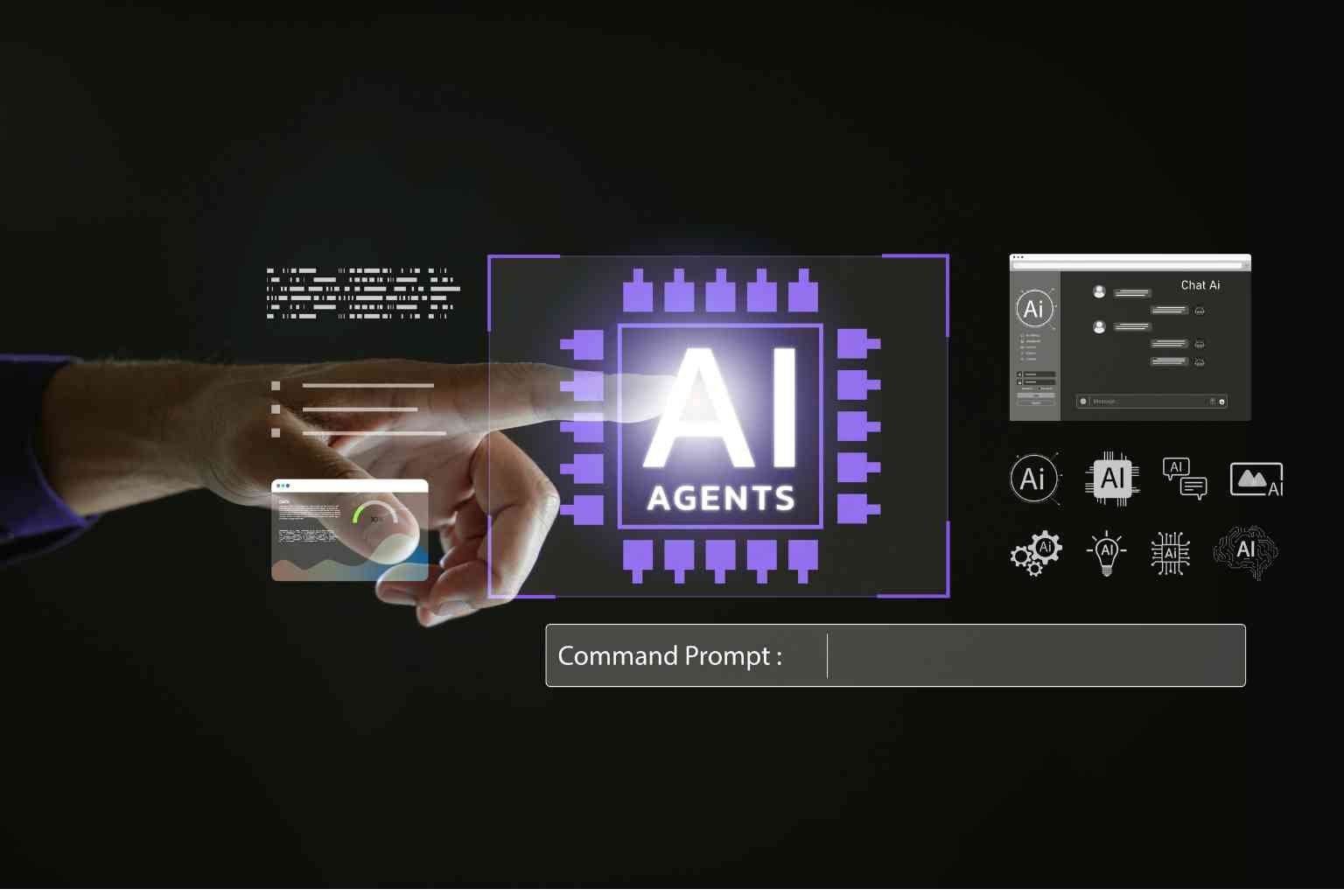
Artificial intelligence is no longer just about chat bots and recommendation systems. Now a new kind of innovation is on the horizon as autonomous AI agents are taking hold. Those systems aren’t just responding to commands. They can plan, coordinate and control their own task assignments with little human intervention. Whether it’s scheduling their day or doing research on the Internet, autonomous AI agents are transforming into digital helpers that respond to and work on behalf of a user.
With the latest advances in technology, they are moving from tools to everyday life companions.
1. What Are Autonomous AI Agents
Independent AI agents are software systems capable of acting autonomously. They are not the usual apps that need step to step guidance and support, rather they analyse goals, collect data and automate tasks. They employ machine learning, natural language processing and automation software for tasks.
For instance, an AI agent might search for flight prices, purchase tickets and send confirmations with minimal intervention.
2. How They Are Not Like Traditional AI
Conventional AI waits for orders and works directly. On the contrary, agents are able to break down a goal into sub goals and eventually perform them. They have the capacity to watch for changes and respond adaptively.
They are more dynamic and effective for being independent.
3. General Daily Tasks Performed by AI Agents
Autonomic AI agents are already helping out in:
- Scheduling meetings and managing calendars
- Organizing e-mails and answering frequent questions
- Monitoring expenses and paying bills
- Conducting online research
- Automating repetitive office tasks
These are time and mental effort saving tasks.
4. Impact on Productivity
By automating mundane or laborious tasks, AI agents help people concentrate on higher value work. Professionals can then focus on strategy and creativity when automation takes care of routine tasks.
This shift increases overall efficiency.
5. Contribution in Smart House and Personal Life
Lighting, temperature and security systems, as well as appliances are also controlled by autonomous agents in the smart home. They get to know what you like and with certain tools set accordingly for you automatically. On a personal front they can aggregate reminders, monitor health data and plan out daily routines.
The point is that it should quite naturally become a part of your daily life.
6. Business AI Agents
AI agents are increasingly used to automate operations in businesses:
- Customer service chat automation
- Supply chain monitoring
- Financial reporting assistance
- Data analysis and forecasting
- Automated marketing campaigns
These systems lower operating costs and increase response time.
7. Challenges and Ethical Considerations
However, despite the advantages, autonomous AI agents encounter:
- Data privacy concerns
- Algorithm transparency issues
- Errors possible with no human oversight
- Job displacement fears
- Dependence on automation
Responsible development and regulation are necessary.
8. Learning and Adaptability
Self learning agents get better and better at given tasks, such as predicting user decisions, over time. They study patterns and polish the decision making models. This flexibility makes them more tailored and efficient.
9. Reducing Cognitive Load
Life consists of many small decisions everyday. AI agents work by automating the mundane elements of duties, thus freeing up users cognitive capacity. It can help improve focus and reduce stress.
10. The Future of Self Governing AI Agents
In the future, AI agents may work together across devices and services. They might deal with intricate multi step jobs such as financial planning or travel arrangements without ongoing oversight. These agents will only get more dependable, safe and more thoroughly integrated into our everyday life.
AI based systems are not meant to replace humans but to assist them. They increase productivity, ease and convenience while humans continue to guide them.
Key Takeaways
Semi or fully autonomous AI agents rely on minimal supervision for tasks
They increase efficiency by automating routine work
There is increasing adoption of these systems in smart homes and businesses
Ethical and privacy concerns must be handled carefully
The future is in deeper integration and smarter automation
FAQs:
Q1. What Do You Mean by an AI Agent Being Autonomous?
It is an AI that can plan and act on its own.
Q2. How is it different from a chat bot?
A chatbot follows direct instructions while an autonomous agent can act independently toward goals.
Q3. Is it safe to use autonomous AI agents?
They can be safe with robust security and oversight.
Q4. Could AI agents do the work of human employees?
They are designed to automate repetitive tasks but still require human oversight.
Q5. Will AI agents be ubiquitous in everyday life?
Yes, as technology progresses their applications will likely appear in homes and workplaces.